
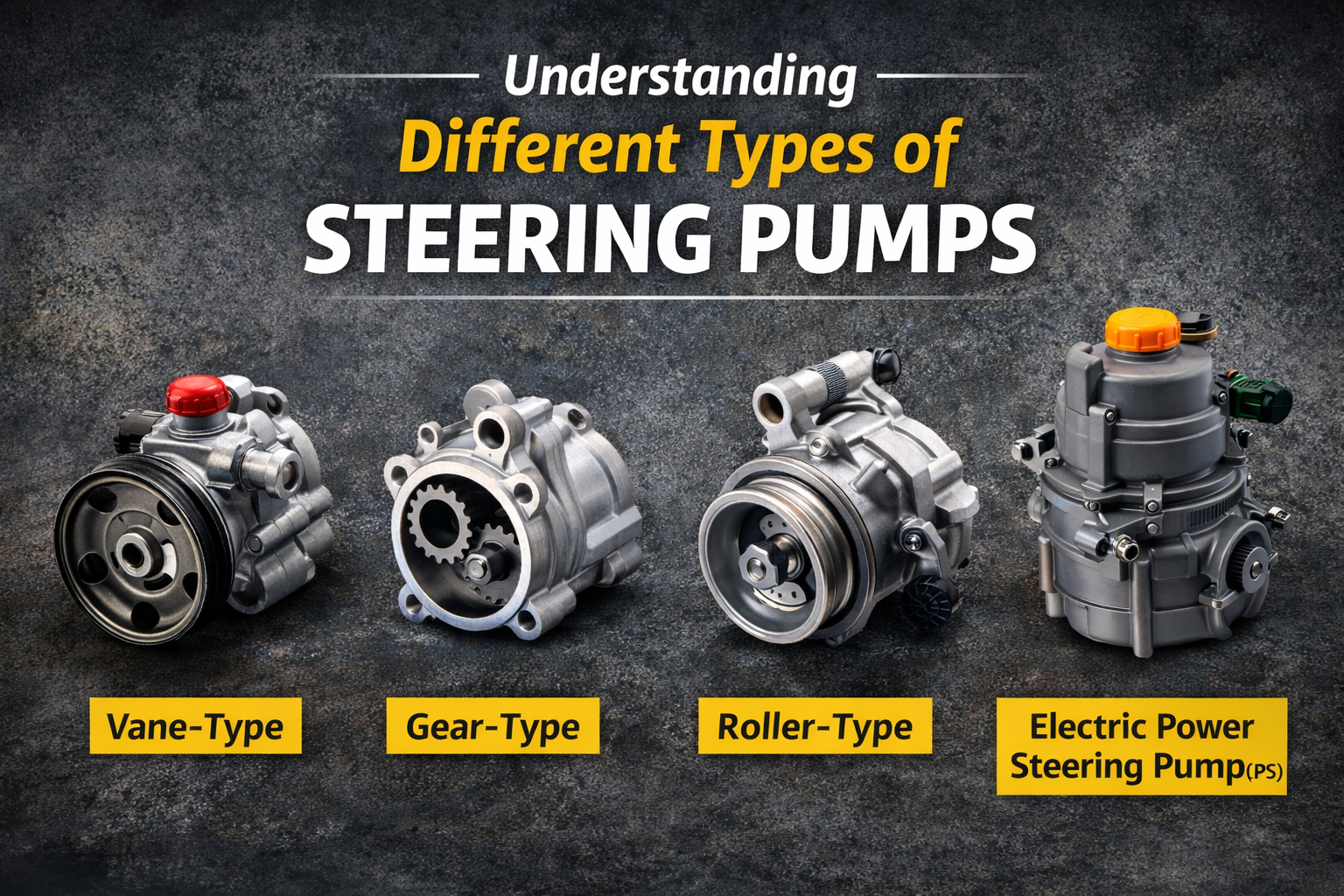
Modern vehicles are designed to make driving easier and more comfortable. One of the key components that helps drivers control their vehicles smoothly is the steering pump. The steering pump plays an important role in the power steering system by supplying the hydraulic pressure needed to turn the steering wheel with less effort.
Without a properly functioning steering pump, steering can become very difficult, especially at low speeds. Understanding the different types of steering pumps can help vehicle owners and technicians make better maintenance and replacement decisions.
What Is a Steering Pump?
A steering pump is a component in the power steering system that creates hydraulic pressure. This pressure helps move the steering mechanism, allowing the driver to turn the wheels with minimal effort.
The pump usually works by circulating power steering fluid through the system whenever the engine is running. This fluid pressure assists the steering gear when the driver turns the wheel.
1. Vane-Type Steering Pump
The vane-type pump is one of the most commonly used steering pumps in many vehicles.
How It Works
This pump contains a rotor with several sliding vanes inside a circular chamber. As the rotor spins, the vanes move outward and create pressure that pushes the hydraulic fluid through the steering system.
Advantages
- Smooth and quiet operation
- Efficient fluid flow
- Reliable performance in most vehicles
Because of its efficiency and durability, the vane-type pump is widely used in passenger cars.
2. Gear-Type Steering Pump
Gear-type steering pumps are often used in heavier vehicles such as trucks and industrial machines.
How It Works
This pump uses two rotating gears that mesh together. As the gears turn, they trap hydraulic fluid between the gear teeth and move it through the pump to create pressure.
Advantages
- Strong and durable design
- Handles higher pressure levels
- Suitable for heavy-duty applications
However, gear pumps may produce slightly more noise compared to vane pumps.
3. Roller-Type Steering Pump
Roller-type pumps are similar to vane pumps but use rollers instead of vanes to move hydraulic fluid.
How It Works
The pump contains rollers that rotate inside a specially shaped chamber. As the rollers spin, they create pressure that moves the steering fluid through the system.
Advantages
- High efficiency
- Smooth pressure delivery
- Long service life
These pumps are designed to provide consistent hydraulic pressure for improved steering performance.
4. Electric Power Steering Pump (EPS)
Modern vehicles are increasingly using electric power steering pumps instead of traditional hydraulic systems.
How It Works
Unlike hydraulic pumps that are driven by the engine, electric power steering pumps use an electric motor to provide steering assistance.
Advantages
- Better fuel efficiency
- Reduced engine load
- Less maintenance required
- More precise steering control
Electric power steering systems are now common in many modern cars because they improve efficiency and performance.
Signs of a Faulty Steering Pump
A failing steering pump can cause several noticeable problems. Some common signs include:
- Difficulty turning the steering wheel
- Whining or squealing noises when steering
- Leaking power steering fluid
- Steering that feels stiff or unresponsive
If any of these signs appear, it is important to inspect the steering system and replace the pump if necessary.
Conclusion
Steering pumps are essential components that help drivers control their vehicles safely and comfortably. From vane-type and gear-type pumps to modern electric power steering systems, each type is designed to provide reliable steering assistance.
Understanding the different types of steering pumps helps vehicle owners choose the right replacement parts and maintain their vehicles properly. With the right pump and regular maintenance, the steering system can continue to function smoothly for many years.ure your closing thoughts are impactful and memorable. A strong conclusion not only ties the article together but also inspires readers to engage further.
Leave a Reply